Brooders
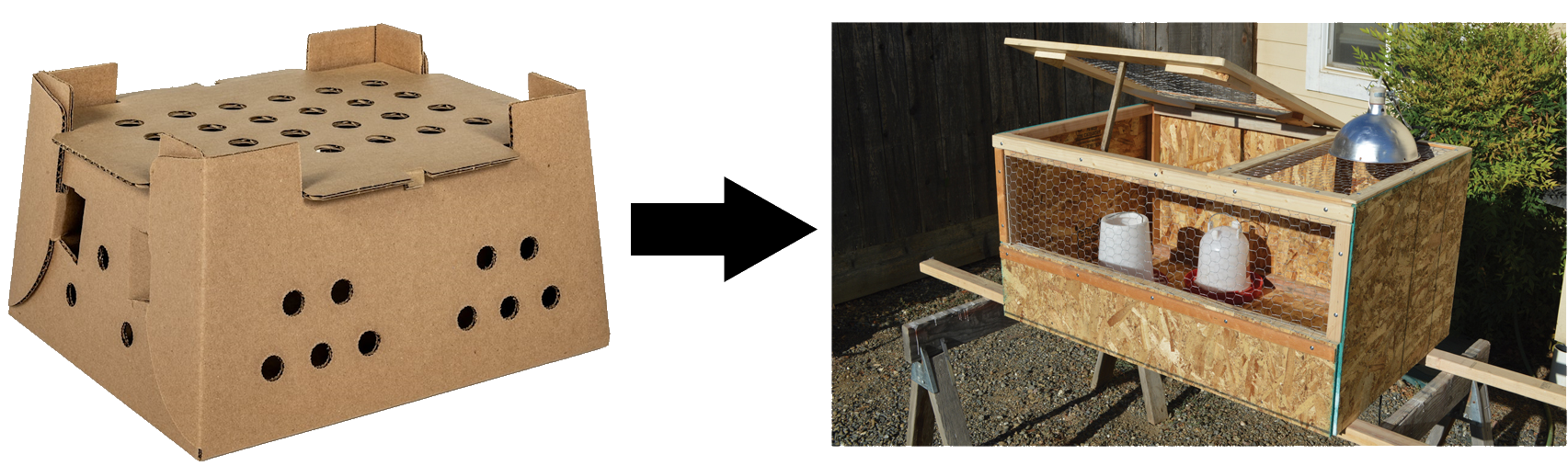
Chicks must be moved ASAP once they arrive. Shipping containers like this have air holes, but they need lots more space.
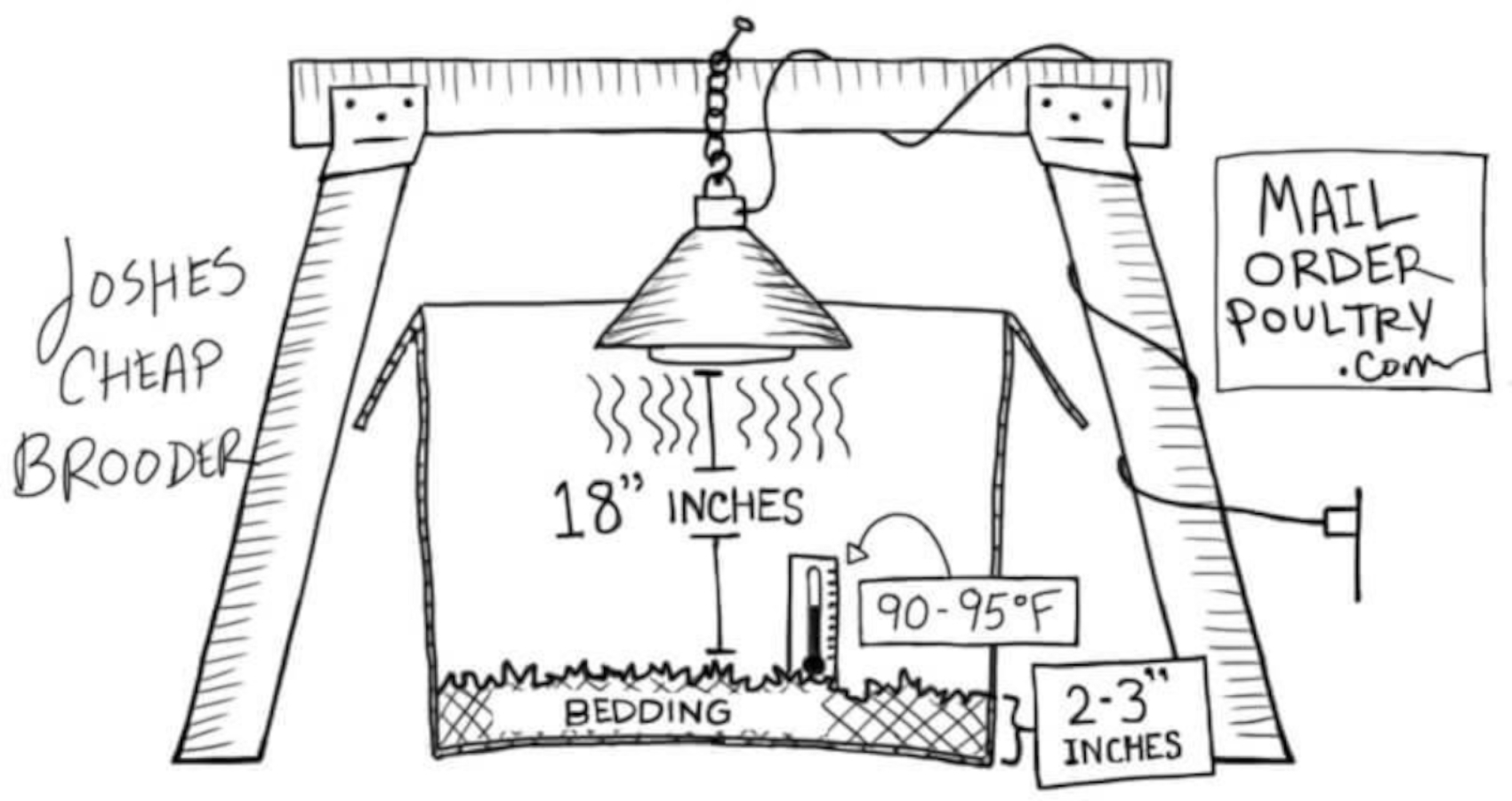
To keep the chicks warm, use a 125-175 watt lamp.
It can be hung or laid on top of wire as shown in the diagram from mailorderpoultry.com.
For safety: 1) ensure that the lamp is not secured by the cord, use a chain or grate 2) keep a thermometer inside the brooder 3) place the lamp such that the chicks can always access it, but have a corner to escape to if they're too warm.
If they're all huddled under it, it's too cold, if they're all in the corner, it's too warm.
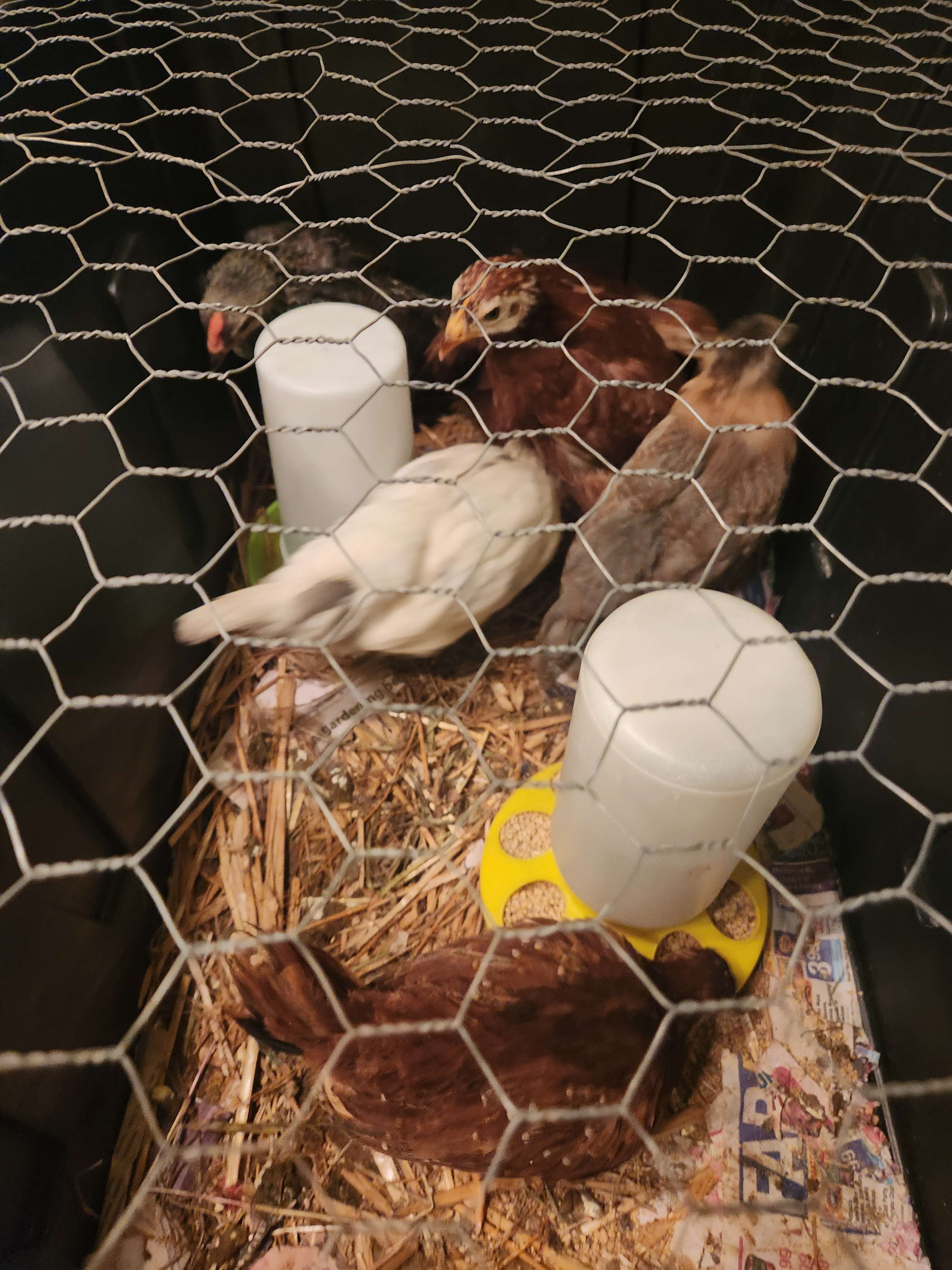
Chicks require 1 square feet each in the first 3 weeks.
At the end of week 3, they will want 2 square feet each. If they start pecking one another, they need more space. Cargo boxes like these are great for making a mobile brooder that can withstand a heat lamp, but once "teen" feathers start coming in, it's time to move outside!
Building Coops
#1 Most Common Misnomer: Chicken wire is not for farming birds, it is for farming plants!
Chicken wire is sharp, can be torn by clawed predators, and its gaps are wide enough for rodents to slip through. Use construction mesh instead.
Two layers of mesh can ensure that predators cannot stick their claws through.
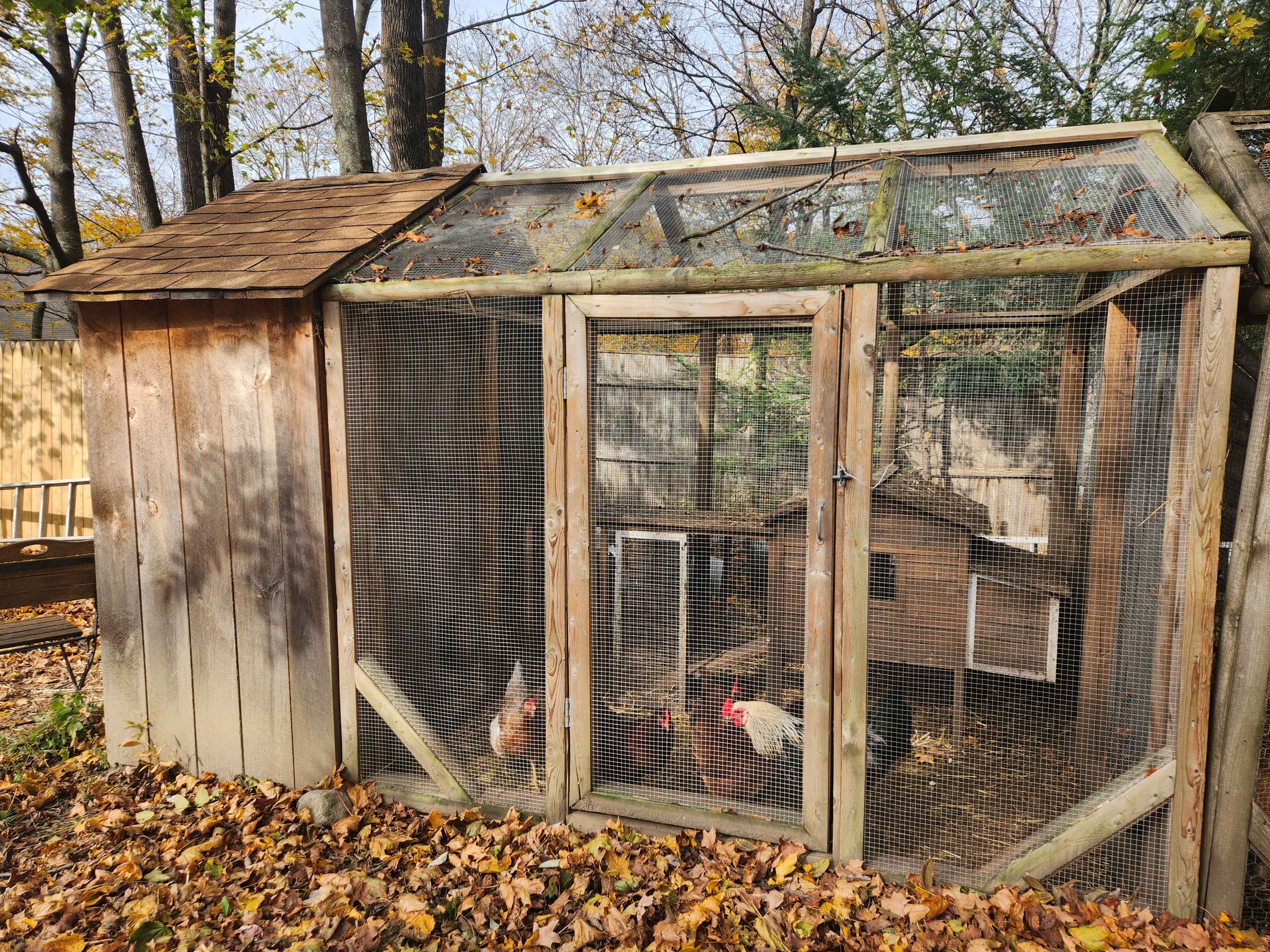
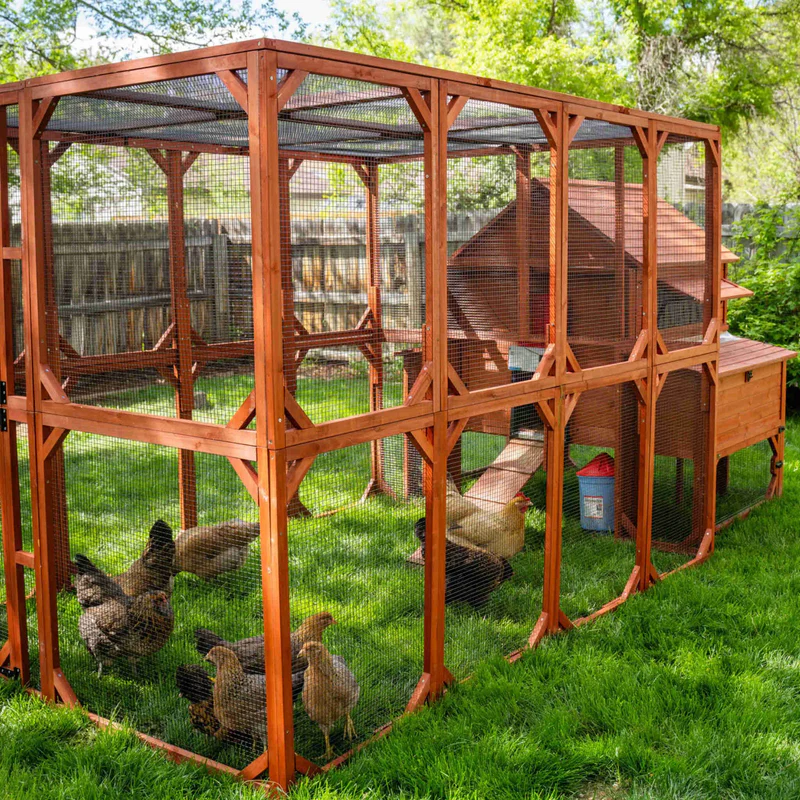
The three most important things to think about when designing a coop are 1) Weather 2) ground coverage and 3) air coverage
1) Even outside coops need ventilation, so windows that use pressure-treated wood are necessary to stand up to the elements. Make sure that it is rated for use in your area.
2) 6 inches is a good depth for burying wire to keep out burrowers, but placing concrete blocks below the dirt will keep your girls extra safe.
3) Wire should stretch over the outside portion of the coop. When letting chickens out into the yard, they will naturally gravitate to areas of dense foliage and under cars to hide from prey birds.
Buying Coops
Purchasing a coop will cost between $800 and $1,800, so it is up to you if the time saved by buying one is worth the investment.
Your local farm store will have weather-treated coops with roofs, but most will not include the ability to entrench wire so that burrowers cannot enter, that is up to the buyer.
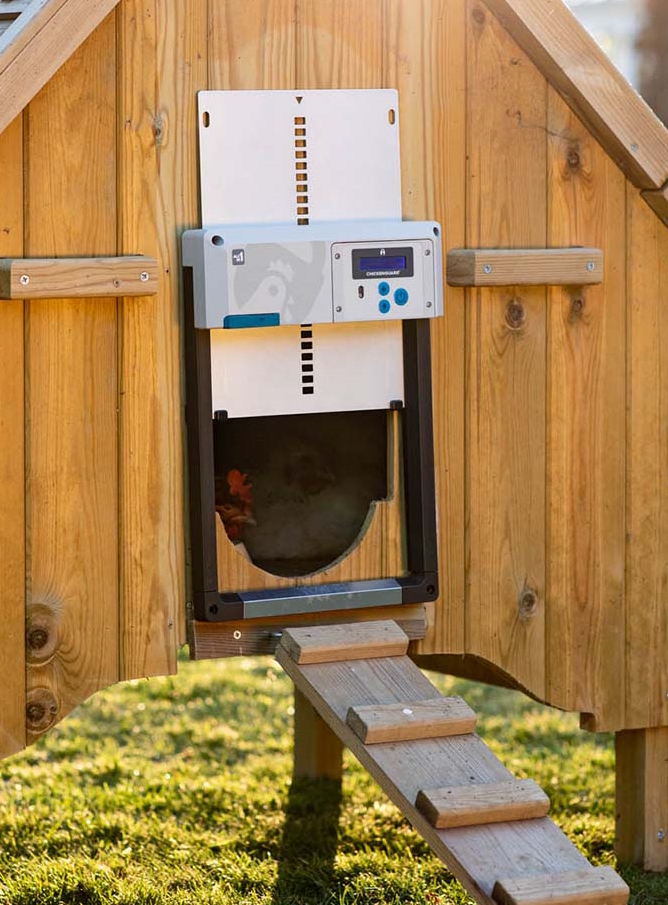
However; if opening the coop door at the crack of dawn and shutting it after sundown sounds like a pain, we would recommend an automatic door.
These run about $100 per unit without installation, and can be set to either open/close at certain times or within certain light thresholds.
They run on batteries that will need to be replaced around once per two months.