the logo and title of Backyard Chickens 101
Home Q/A Coops Timeline Contact Breeds Camera

Click below to see a typical timeline for raising chickens

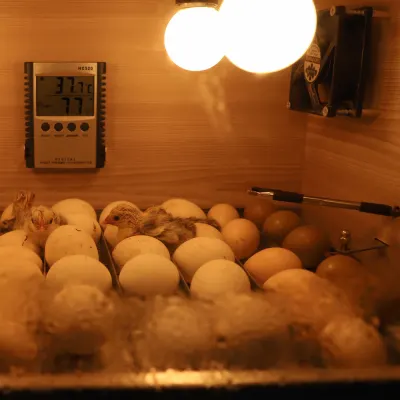
freshly hatched chicks and eggs in a climate-controlled incubator

Optional: Hatching

Fertilized eggs can be hatched in an incubator. An 80% success rate can be expected from home eggs with a rooster, and eggs bought from the store will not be fertile.

Chicks may be just as health one way or the other, hatching is not necessary and it is typical to purchase recently hatched chicks throughout the spring.

Eggs and chicks can be purchased to ship online any time of year, but this is understandably risky and not recommended.

Eggs will hatch approximately 21 days after the start of incubation, no matter how long they were in a box. The same goes for allowing a broody hen to hatch her egg.
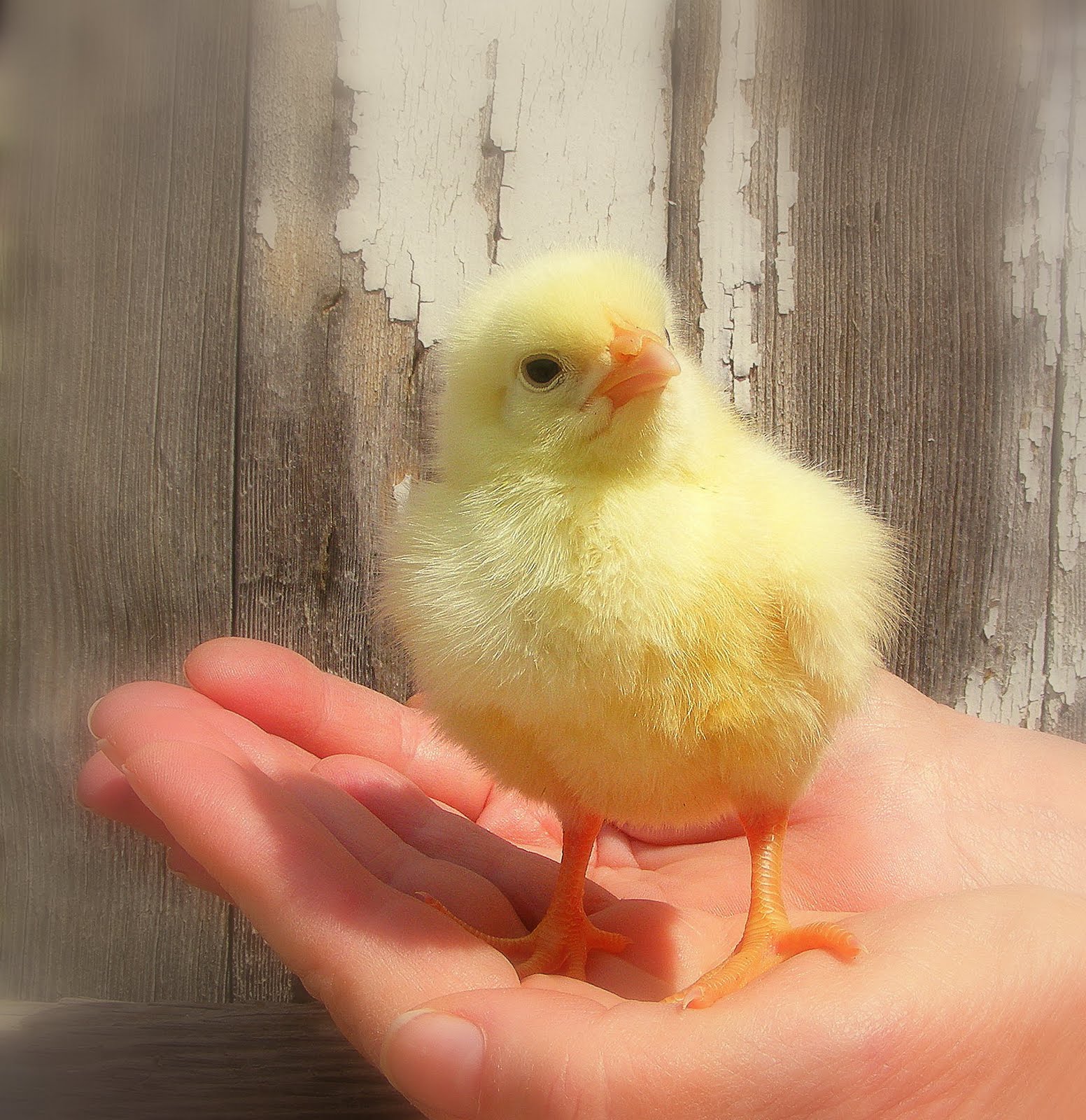
a baby chick with fluffy yellow down

New Chicks!

Newborns are covered in down. They will quickly be able to walk and see, but are reliant on their mothers and owners for everything else.

A chick "playpen" can be viewed under the Coops heading. They require a heatlamp and daily food+water where they can easily access. They cannot fly, but may wish to jump on their feeders.

This is the premiere time to have your birds "imprint" as pets. Although they do not follow their mother like other birds, chickens can remember faces and smells, and will warm up quickly if interacted with at this stage.

Just holding them close to a source of body heat is perfect, as they are delicate and should not be moved too much.

Chicks eat "starter feed" until week 8.

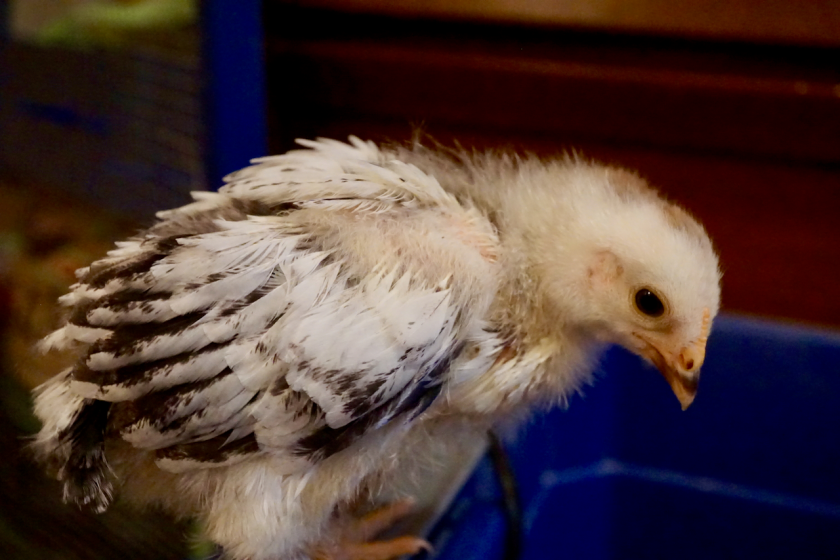
a young chick with feathers replacing down

Terrible 2s (two weeks)

By this point the chicks are starting to develop as social animals. They can fully recognize different humans and know who their sisters are.

Because of this, a pecking order will develop. It is worth being mindful and separating birds that get too aggressive.

If these chicks are to be integrated into an existing flock, now is the time to let both groups see each other from a distance (such as through wire).

Feathers that are able to regulate body heat will appear near the tail, but a heat lamp is still required.

Occasional treats can be integrated into the diet, but "starter feed" is still the most important element.

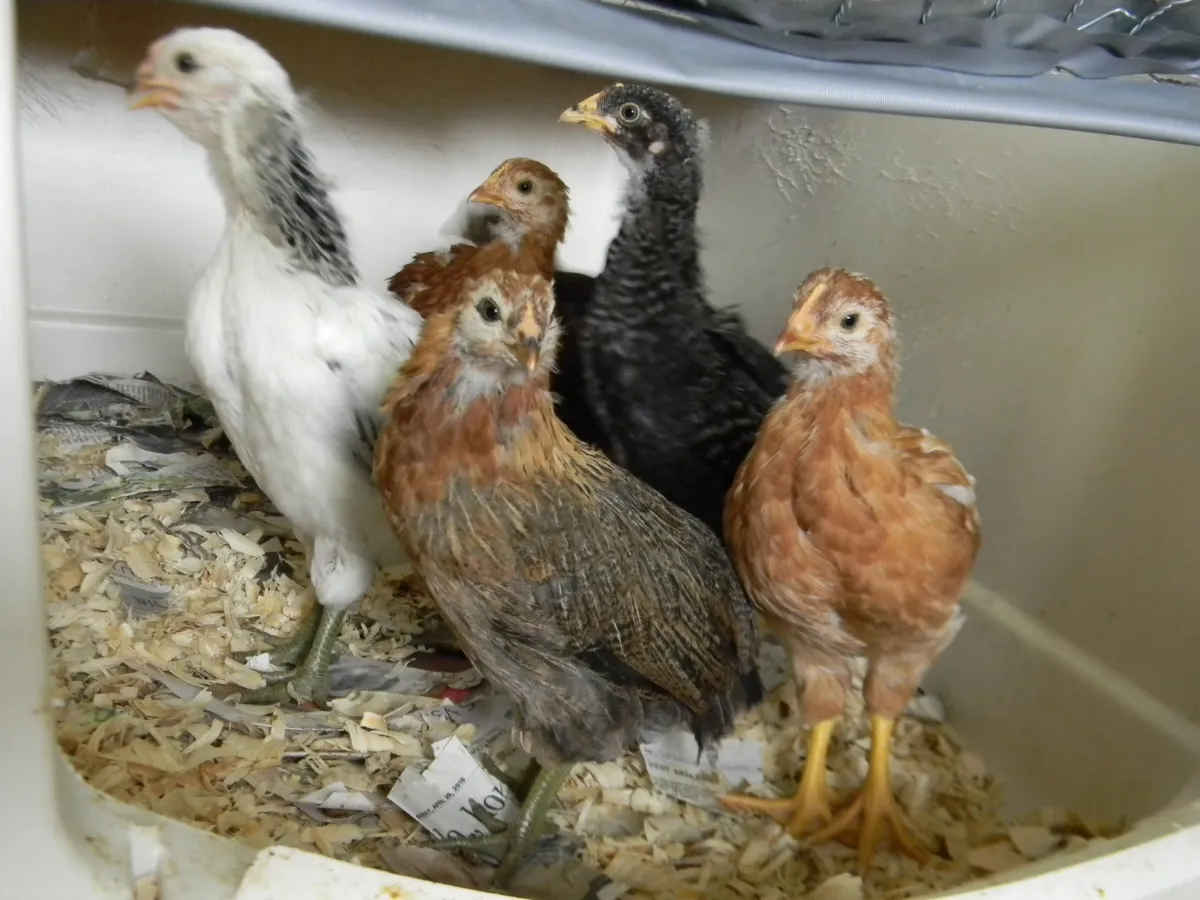
young hens with assorted feathers

Teens

The pullet stage is when the brooder is officially retired and the flock moves out of the house.

So long as they have been introduced to your mature birds, they can even be added to an existing flock.

Weeks 3-8 still use "starter feed," weeks 8-16 use "grower feed" which, as you might not expect, has less protein and medication-content - instead it increases the level of calcium and omega-3s for bone and digestion health.

Both your bird's feather patterns and personalities will fully emerge - nows the time to name them (they're hard to tell apart as babies) and make sure they know you bring the scratch and mealworms with your hand. (Treats shouldn't make up more than 9% of the diet, as much as your birds might disagree)

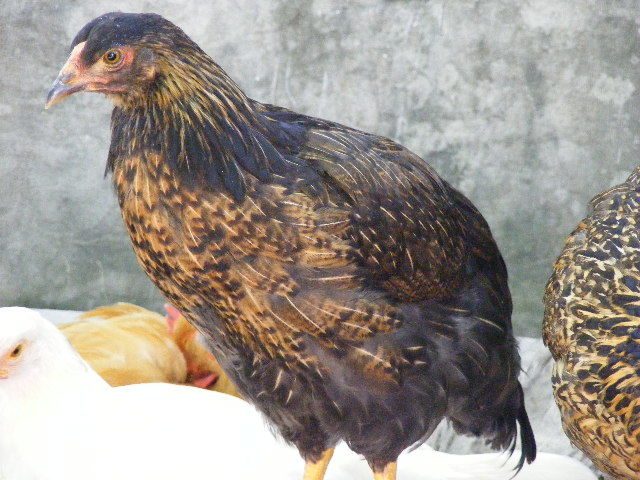
a pullet with a full coat of feathers

Preparing to Lay

From this point onwards, chickens eat "layer feed" for their primary diet.

They can also be trusted to scavenge outside for robust nutrients and stimulation. Chickens can be trusted to regulate their (non-treat) food intake, and letting them scratch in the dirt helps with this.

Hens will begin exhibiting laying behaviors such as selecting a nesting box, cackling, and sitting still for multiple minutes.

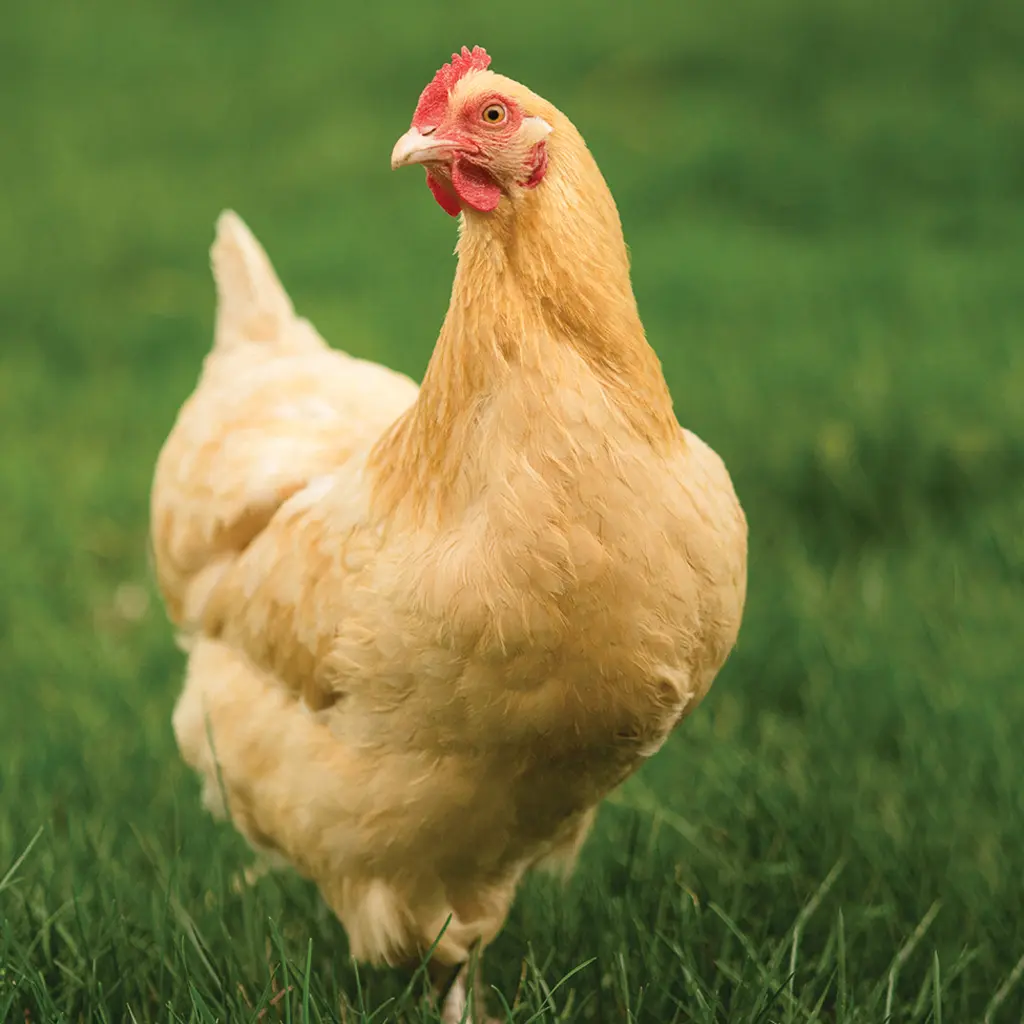
a mature hen with bright yellow feathers, wattle, and comb

Mature Hens

This is the most productive stage of a hen's life. Their diet of "layer feed" contains the high calcium necessary to lay so many eggs.

If you choose to have a rooster, he will keep the flock safe and content - but be aware that these eggs are fertile. Be vigilant for hidden eggs, or ones that have been sat on for multiple days - or be ready to hear cheeping from the nesting box!

Your birds' personalities and pecking order have been fully established at this point. By year three chickens have become creatures of habit and will keep regular schedules.

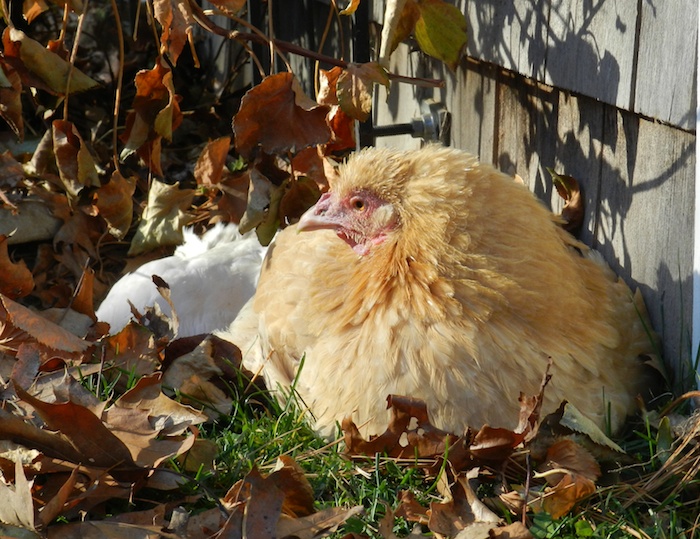
an aged hen with whitening feathers, relaxing in the sun

Retirement

Most breeds will stop laying, but some occassionally add to the nest of younger hens or remain broody for their entire lives. Do not neglect to check nesting boxes just because a hen has not laid in a while!

Older chickens will tend to stay at the top of the pecking order, but they can become accustomed to new chicks (not new hens).

"Retired" birds also spend more time with humans - whether this is companionship or lack of fear is up to interpretation.

Chickens can be expected to live 10 years, and it is not uncommon for well-raised and well-loved pets to live longer than that. Production chickens and meat birds will have beeen lucky to reach year 6.

A chicken in "hospice" may very well be happy, but they are prone to disease and may need to be manually washed with epsom salt and scizzors to remove blockages. If you notice that they are not able to eat or accept hand/drip feeding, it is unfortunately time to consider euthanasia.